Dec 28, 2025
 3 min read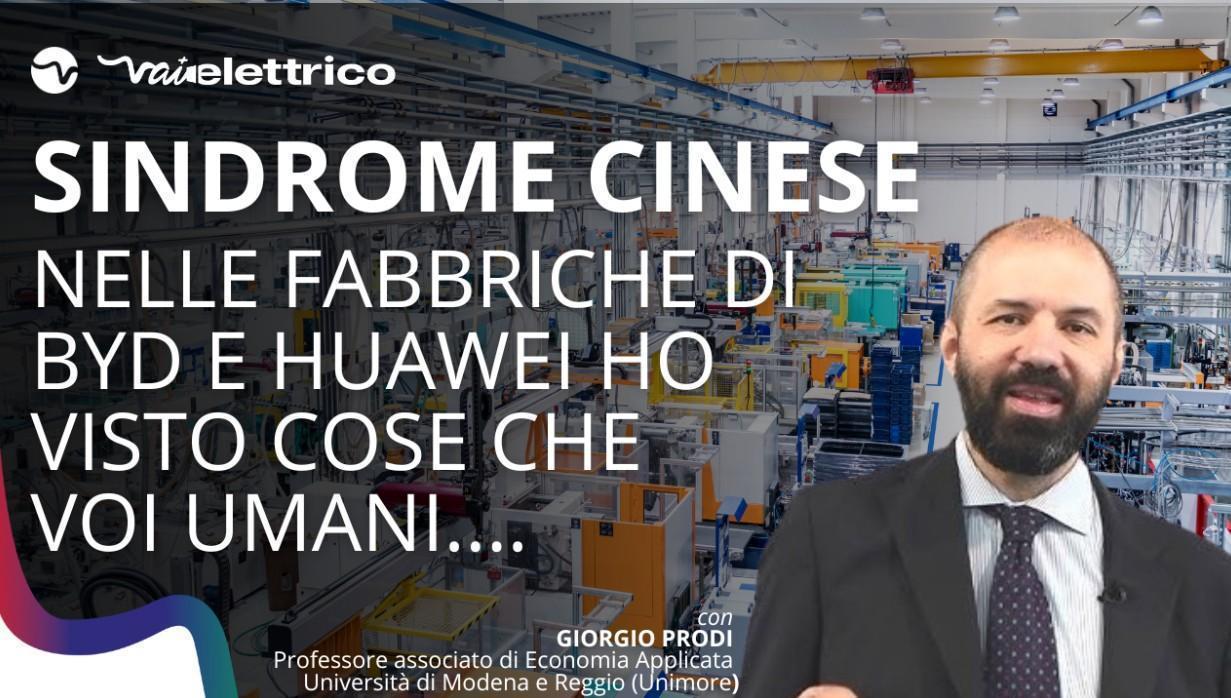
According to a study, out of 129 electric car manufacturers in China, only 15 of them will survive.Here's who can stay in Europe.
Economist GIRorgio Prodi has just returned from China - he goes there every year - and told us that he had seen "unimagenable things".For example: autonomous driving level 2 is at regular use, 600 kW of charging, companies as ByD and Huawei have an army of tens of thousands of engineers working on research and development.Developed a kind of anti-truly law to prevent an imminent bloodbad between 129 Chinese automakers.In fact, a study of international consultancy ALIXPARTNers predicts that only 15 brands will survive in 2030.
From the year 2018 until today, more than 300 people have gone bankrupt or swallowed big names.Overall, China's electric vehicle industry appears to be growing rapidly, but is threatened by strong competition and fragile profitability.And the entire industry seems almost invincible.
Chinese automakers have many strings to their bow
He says there is an infinite internal market that ensures “the economies of scale and volume needed to amortize the massive investments in innovation and production efficiency.”It's no coincidence that half of the robots installed worldwide this year are in China alone.
Catl unveils the industry's first use of humanoid robots
It manages "the entire electric car supply chain", from the engine to the battery, from electronics to software.It operates on the basis of "well-defined strategies and decisions made twenty years ago".
In the past, the sector benefited from generous public subsidies, which have now all but disappeared.It enjoys lower labor costs than Western competitors, but for the lowest levels of work, not engineers and researchers.So "the challenge is much more complex than described: it is based on innovation, research, technology. We are facing very large and efficient companies: let's not fool ourselves that we can catch up in two or three years."
It does not retain the duties and privileges of European cars
The EV tariff has not stopped Chinese manufacturers from gaining European market share by shifting the accelerator to hybrids.The new negotiations are to replace the tariff with import quotas and the floor price (a regime adopted in the 1990s by the Japanese) could "guarantee high-profit margins for Chinese exporters".
The safety of the European car sector is on the rise." Brussels has set itself the goal of decarbonization but has not taken the necessary measures to achieve it - concludes Prodi, following the position of the Draghi Plan on the European competition -. It can and should do so now, but if we see that half of the measures are no longer enough: we need a significant increase in financial aid.
Alixpartners' analysis does not come to completely different conclusions, but shows some elements of the fragility of the Chinese industry;For example, low profitability.We conclude that we will not see a randomized invasion of Europe, at least in the short term.
Income and sales under control: Only five are profitable
In 2024, only five brands - BYD, Tesla, Li Auto, Seres and Huawei - managed to generate profits in the electricity sector.Even well-known names like Nio and Xpeng continue to burn capital, while showing signs of recovery.
Sales of electric and plug-in hybrid vehicles in China continue to grow, accounting for more than half of registrations.But the increase in volumes is not enough to ensure economic sustainability, especially in a market characterized by a constant price war.
According to Zhu Xican, a professor of automotive engineering at Tongji University, manufacturers that do not sell more than 2 million vehicles a year are unlikely to survive in the long term.A very high bar that automatically excludes dozens of smaller brands.
New rules from 2026: maximum consumption 15.1 kWh / Km
Another challenge facing Chinese manufacturers is the new mandatory national standard that will regulate the power consumption of pure electric passenger cars from January 1, 2026. This standard is the world's first mandatory standard for electric vehicle power consumption, which has a direct legal effect on new production models.Km. So if you use the same battery, the battery should increase by about 7%.
Some big names such as BYD and Geely can have models that meet these requirements, but many other manufacturers will have to make major changes to their cars or withdraw them from the market.And for that reason, Prodi says, maximum price caps in the domestic market (and at least for exports to Europe) "will not stop the most innovative Chinese automakers from establishing themselves over their competitors."
Also read "EU's "flexible" car in 2035: a breath of fresh air, but in the short term" and watch the video
Energy consumption limits are very important, this is really good news.
PS: To me, as a layman of industrial/commercial costs, it seems excessive to fear that European brands, even at worst reduced to assemblers of modules for foreign electric trains, will remain only a small part of the value chain.
even just the body of the car and the many accessories (interior, air conditioning, adas and driving assistance, after-sales assistance service) are worth enough.
So we can add parts of the power train to the European part if we want:
The engine, inverter, transmission, charger do not have to be Chinese. But there is a European component, or at least a mixture of foreign companies... And the average consumer does not quibble too much between the latest powertrains. There are already two (usually Chinese) and one of the latest (European) models with good performance. Further improvements are now minor.
And then we can also add the battery pack assembly that is done in Europe.They will also be a low-margin business, but in smaller segments, and all of this will also eat into part of the total automotive value chain.Although there may not be the high margins that European automotive partners are used to after 2022.
Eventually the battery cells will be out of the European side, and in Asia they will always be one step ahead with their economies of scale.
But here too: by adopting previous generation technology cells (as we do) production and logistics can be and be in European cells as well... Catl/DYD or LG/SK may have "money" left for the owners of these cell designs, part of the profit, but they are reduced due to competition in the market, I don't think there are many of them.
that is, I think that some European businessmen will receive from everything they do, helping trade agreements (and maybe even joining Chinese organizations), some kind of protection, and more help from the states.
It is suspected, however, that the labor force in the European automotive industry will shrink in the future (due to cost competition from these large and highly efficient foreign competitors rather than the specific type of engine in the bonnet, and perhaps also due to the different uses of the car).
..I would give the green light to the installation of renewable energy, which could free us from dependence on foreign energy and create more jobs, both indirectly and directly.. in the case of Italy alone, we are talking about a million jobs (PS: highly skilled jobs, not workers for super bonuses).. if someone wants to point this out to our current Italian government.
Well, for renewables, but to be competitive, we need a share of nuclear power combined with the above.
It also ensures independence and reduces the costs of the electricity bill.
As Massimo said, are we done?Maybe, especially since we haven't seen a European car project that combines power and knowledge.It's not a matter of competition in BEVs, many don't understand.China competes with us in every field, and maintaining an internal combustion engine supply chain is useless, in fact harmful, a waste of time and money.
"Brussels has set itself ambitious decarbonisation goals without adopting the policies necessary to achieve them - concludes Prodi", Prof.Prodi recognizes the mistakes of the European Commission and Parliament, who thought they would restructure the European car industry with directives without putting money into the necessary investments, as the Chinese government wisely did, with a multi-year vision.
I have a different theory: in my opinion
this case shows some limitations,
already known
an economic system based on a free market,
So the comparison with China's planned economy is untenable
and the economic settlement did not last
If the regulated parties do not correspond to the single market, they will be subject to the rules, but it is even worse if the rules affect economic agents operating in other markets without such rules.
But it is not even a problem of regulation.In the US, where there are no such rules, the problems are the same, if not much worse.
In short: the laser beam of the free market doesn't work, the global impact, and the change brought about by free enterprise is too slow for China's economic realism, which has been fueled by Western free enterprise since the 1990s.
I think they collided
two different egos,
The individualistic selfishness of Western business life, which seeks its own profit and necessarily seeks immediate profit,
e l’egoismo di Stato cinese, che fa la stessa cosa ma su scala mostruosamente più grande.
It reminds me of medieval Italy of the Municipalities, against the emperor and the Pope, and the nascent nation-states (France, Spain, England), I fear that Europe may end up the same as Italy then.
In short: the loser in this problem is the idea of the free market as an undisputed behemoth, let's remember the 2000s and the debate on this subject in Italy.
today it seems borderline surreal
Well in the United States there is a solution, 100% tariffs on all cars (not just BEV) imported from China, in Europe as usual we have to deal with dj oaglua and faccjamk nezze cge useless measures.In Europe they get money and like Jn Cjna subsidize companies instead of spending useless weapons (well seen in the United States) or they put tariffs at 100% like them and in the meantime they build jn infrastructure (European not just some wannabe Nazis) that can support electric mobility from 2035 onwards.